
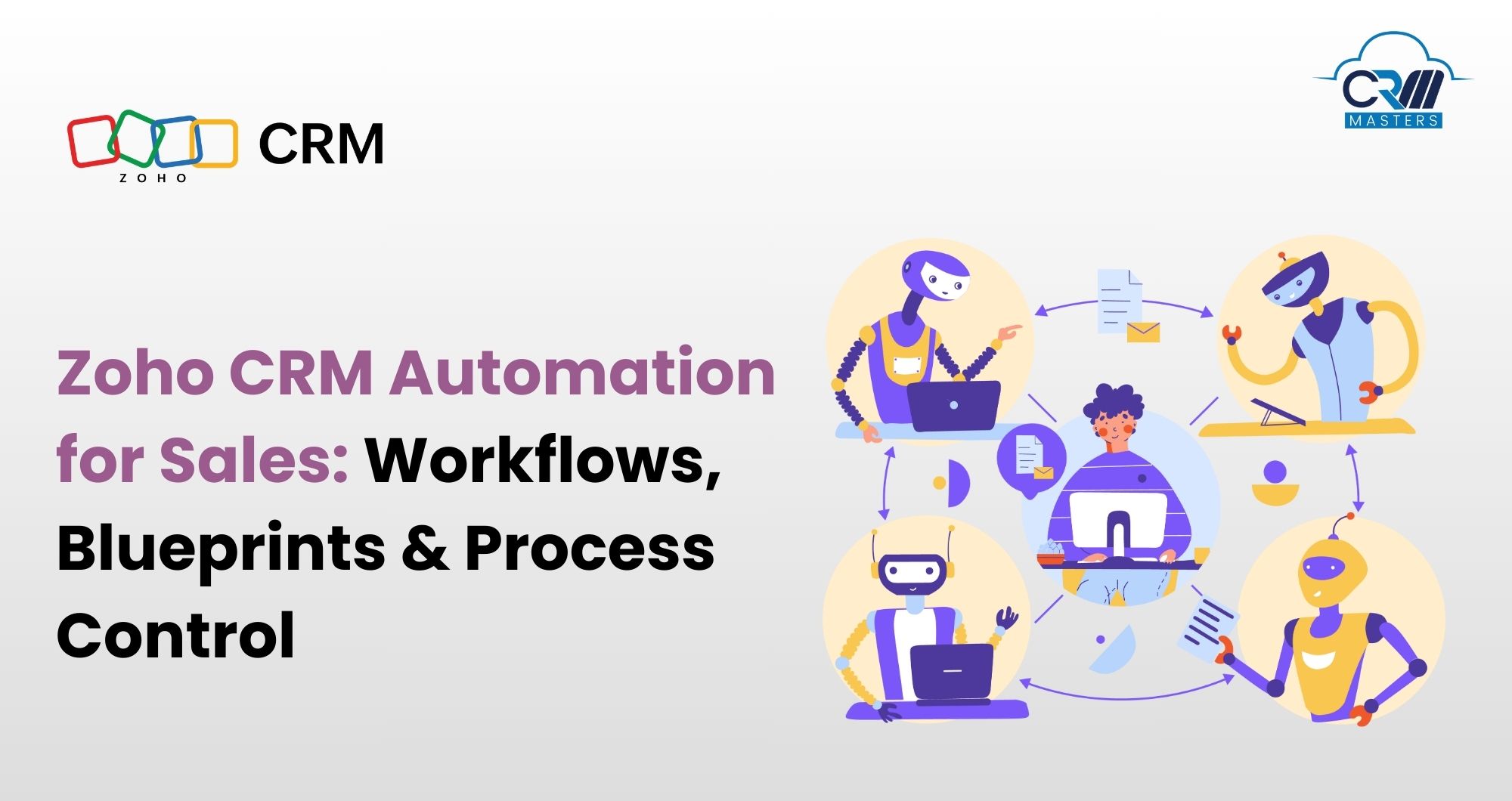
Zoho CRM Automation for Sales: Workflows, Blueprints & Process Control
In fast‑growing businesses, manual CRM processes quickly become bottlenecks. Sales teams waste time on repetitive follow‑ups, managers struggle with visibility, and opportunities slip through the cracks. This is exactly where Zoho CRM Automation delivers real value.
Zoho CRM Automation helps businesses automate sales workflows, standardize processes, eliminate manual tasks, and ensure every lead is handled consistently. When implemented strategically, automation improves productivity, shortens sales cycles, and increases conversion rates.
In this in‑depth guide, we’ll explore what Zoho CRM automation is, how it works, key automation features, real‑world use cases, best practices, and why working with experienced Zoho consultants can maximize results.
What Is Zoho CRM Automation?
Zoho CRM Automation refers to using built‑in automation tools within Zoho CRM to manage repetitive tasks, enforce processes, and trigger actions automatically based on predefined rules.
Instead of relying on manual data entry and reminders, automation ensures that leads, deals, tasks, and communications move smoothly through the sales pipeline with minimal human intervention.
Zoho CRM automation becomes even more powerful when aligned with broader Zoho CRM implementation and integrated with other Zoho One apps.
Why Zoho CRM Automation Is Essential for Sales Teams
Sales teams today handle high volumes of leads across multiple channels. Without automation, this leads to:
- Delayed responses
- Missed follow‑ups
- Inconsistent sales processes
- Poor data quality
With Zoho CRM automation, businesses can:
- Respond instantly to new leads
- Ensure consistent sales execution
- Improve sales productivity
- Gain better pipeline visibility
- Scale operations without increasing headcount
Core Zoho CRM Automation Features
1. Workflow Rules
Workflow rules are the foundation of Zoho CRM automation. They allow you to trigger actions automatically when specific conditions are met.
Common workflow automations include:
- Assigning leads to sales reps
- Sending follow‑up emails
- Creating tasks and reminders
- Updating field values
Workflow rules ensure that no lead or deal is left unattended.
2. Blueprint Automation
Blueprints help standardize complex sales and service processes. They guide users through each stage of a deal by enforcing mandatory fields, validations, and actions.
With Blueprints, businesses can:
- Define structured sales stages
- Ensure process compliance
- Reduce dependency on individual sales styles
- Improve forecasting accuracy
Blueprints are especially valuable for organizations with multiple sales teams or long sales cycles.
3. Assignment Rules
Assignment rules automatically route leads, contacts, or cases to the right users based on predefined criteria such as geography, product interest, or deal value.
This ensures faster response times and better customer experiences.
4. SalesSignals and Alerts
Zoho CRM automation includes real‑time notifications when prospects open emails, visit websites, or interact with campaigns. These alerts help sales teams engage prospects at the right moment.
5. Approval Processes
Approval automation helps organizations maintain control over discounts, pricing, and critical updates. Records are automatically routed to managers for approval based on defined rules.
This reduces risk while maintaining operational efficiency.
Zoho CRM Automation with Marketing and Integration
Zoho CRM automation works best when integrated with marketing systems and other business applications. For example:
- Marketing automation tools can pass engagement data into CRM
- Automated lead scoring prioritizes sales‑ready prospects
- CRM automation triggers actions across connected systems
When combined with Zoho CRM integration, businesses achieve seamless alignment between marketing, sales, finance, and support.
Zoho CRM Automation as Part of Zoho One
Zoho CRM automation becomes a central engine when used within Zoho One. Automation can span multiple departments, connecting CRM with finance, support, HR, and analytics tools.
This unified approach eliminates silos and creates consistent workflows across the organization.
Common Zoho CRM Automation Use Cases
Lead Management Automation
Automatically capture, assign, and follow up with leads based on source and engagement.
Deal Stage Automation
Trigger tasks, emails, and updates as deals move through pipeline stages.
Sales Follow‑Up Automation
Ensure timely follow‑ups with automated reminders and email sequences.
Data Management Automation
Keep CRM data clean and consistent through automated field updates and validations.
Challenges in Zoho CRM Automation
While Zoho CRM automation is powerful, common challenges include:
- Over‑automation without strategy
- Poorly defined sales processes
- Inaccurate automation rules
- Low user adoption
These challenges often arise when automation is implemented without expert guidance.
Why Work with Zoho Consultants for CRM Automation?
Experienced Zoho consultants help businesses:
- Define automation strategy aligned with sales goals
- Configure workflows and Blueprints correctly
- Avoid over‑complex automation setups
- Ensure integrations work seamlessly
Working with a certified Zoho implementation partner ensures automation delivers measurable ROI instead of operational complexity.
Best Practices for Zoho CRM Automation
- Automate only what is repetitive and rule‑based
- Document sales processes before automation
- Start simple and scale gradually
- Test automation thoroughly
- Train users for better adoption
Following these best practices ensures sustainable and scalable automation.
Final Thoughts
Zoho CRM automation transforms Zoho CRM from a simple data repository into a powerful sales execution platform. By automating workflows, enforcing processes, and integrating systems, businesses gain efficiency, consistency, and scalability.
When aligned with professional Zoho consulting services and supported by experienced Zoho CRM consultants, automation becomes a long‑term growth driver rather than a short‑term fix.
FAQs
What is Zoho CRM automation used for?
Zoho CRM automation is used to automate sales tasks, standardize processes, and improve productivity and conversion rates.
Can Zoho CRM automation work with integrations?
Yes, Zoho CRM automation works seamlessly with integrated marketing, finance, and support systems.
Is Zoho CRM automation suitable for small businesses?
Absolutely. Zoho CRM automation is scalable and benefits small businesses as much as large enterprises.
Do I need a Zoho consultant for CRM automation?
Basic automation can be self‑configured, but complex workflows and Blueprints benefit from expert Zoho consultants.
How long does Zoho CRM automation take to implement?
Implementation timelines depend on process complexity and automation scope.