
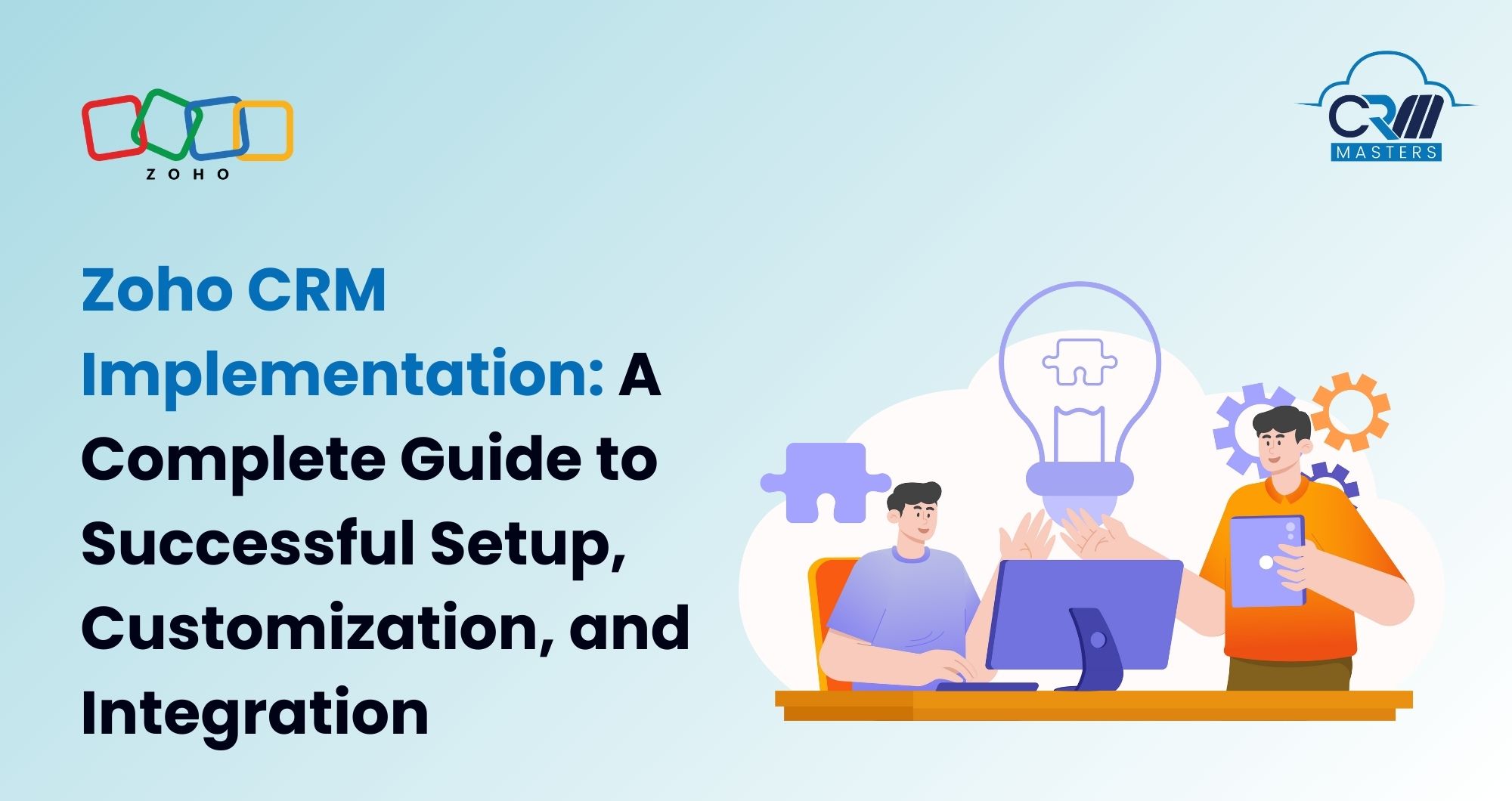
Zoho CRM Implementation: A Complete Guide to Successful Setup, Customization, and Integration
In today’s competitive business environment, managing customer relationships effectively is no longer optional—it’s critical for growth. Businesses need a centralized system that brings sales, marketing, customer support, and operations together while offering visibility, automation, and scalability. This is where Zoho CRM implementation becomes a game-changer.
Zoho CRM is a powerful and flexible platform, but its real value depends on how well it is implemented, customized, and integrated with your business processes. A poorly planned implementation can lead to low user adoption, messy data, and missed opportunities. On the other hand, a well-executed Zoho CRM implementation can transform the way your teams sell, communicate, and scale.
In this in-depth guide, we’ll cover everything you need to know about Zoho CRM implementation—features, benefits, implementation steps, integrations, best practices, use cases, and why working with an experienced Zoho partner or Zoho implementation partner ensures long-term success.
What Is Zoho CRM Implementation?
Zoho CRM implementation is the process of configuring, customizing, and deploying Zoho CRM to align with your business goals, workflows, and customer journey. It goes far beyond basic account setup and includes:
- Requirement analysis
- CRM configuration and customization
- Workflow and automation setup
- Data migration
- User training and adoption
- Integration with other systems
- Ongoing optimization and support
Zoho CRM is also a core component of the broader Zoho One apps ecosystem, making it an ideal choice for businesses seeking an all-in-one operating system.
Why Zoho CRM Implementation Matters
Many businesses sign up for Zoho CRM expecting instant results, only to realize that without proper planning, the CRM becomes underutilized. Effective Zoho CRM implementation helps businesses:
- Centralize customer data
- Improve sales pipeline visibility
- Automate repetitive tasks
- Increase sales productivity
- Enhance customer experience
- Align sales, marketing, and support teams
When implemented correctly—with the help of experienced Zoho consultants—Zoho CRM becomes a revenue-driving system rather than just a data repository.
Key Features Enabled Through Zoho CRM Implementation
1. Sales Pipeline & Deal Management
Zoho CRM implementation allows you to design custom sales pipelines tailored to your sales process. You can track deals across stages, forecast revenue, and identify bottlenecks in real time.
Custom deal stages ensure your sales team follows a structured and repeatable process, improving win rates and accountability.
2. Lead Management & Automation
With proper Zoho CRM consulting, lead capture and routing can be fully automated. Leads from web forms, emails, campaigns, and integrations are automatically assigned, scored, and nurtured.
When paired with Zoho Marketing Automation, businesses can create a seamless journey from first touch to closed deal.
3. Workflow Automation
One of the biggest advantages of Zoho CRM implementation is workflow automation. You can automate:
- Lead assignment rules
- Follow-up reminders
- Email notifications
- Status updates
- Task creation
This reduces manual effort and ensures no opportunity slips through the cracks.
4. Custom Modules & Fields
Every business is unique. Zoho CRM implementation allows you to create custom modules, layouts, and fields that reflect your real-world processes.
Experienced Zoho CRM consultants ensure your CRM mirrors your business—not the other way around.
5. Reports, Dashboards & Analytics
With advanced reporting and dashboards, Zoho CRM gives leadership complete visibility into performance metrics such as:
- Sales pipeline health
- Conversion rates
- Team productivity
- Revenue forecasting
These insights help businesses make data-driven decisions and improve performance continuously.
Zoho CRM Integration: Connecting Your Business Systems
A successful Zoho CRM implementation often involves integrating CRM with other tools and platforms. Zoho CRM integration enables seamless data flow across systems, eliminating silos.
Common integrations include:
- Zoho Marketing Automation
- Zoho Books and Zoho Inventory
- Zoho Desk for customer support
- Third-party apps (email, accounting, ERP, payment gateways)
Zoho CRM Implementation as Part of Zoho One
Businesses using multiple Zoho products benefit significantly from implementing Zoho CRM as part of Zoho One. Zoho One offers 40+ integrated applications covering sales, marketing, finance, HR, operations, and support.
With expert Zoho One support, businesses can create a unified digital ecosystem where data flows seamlessly across departments.
Zoho CRM Implementation Process: Step by Step
Step 1: Requirement Analysis & Strategy
A successful implementation starts with understanding business goals, challenges, and workflows. Certified Zoho consultants analyze current processes and map them to Zoho CRM capabilities.
Step 2: CRM Configuration & Customization
This includes setting up modules, pipelines, layouts, automation rules, and permissions tailored to your organization.
Step 3: Data Migration
Existing customer data is cleaned, structured, and securely migrated into Zoho CRM without loss or duplication.
Step 4: Integration Setup
CRM is integrated with other Zoho apps and third-party systems through expert Zoho CRM integration.
Step 5: Testing & User Training
Before go-live, workflows and automations are tested. Teams are trained to ensure smooth adoption.
Step 6: Go-Live & Optimization
Post-launch monitoring and optimization ensure the CRM evolves as your business grows.
Benefits of Working with a Zoho Implementation Partner
While Zoho CRM is flexible, expert guidance ensures faster results and fewer mistakes. A certified Zoho implementation partner helps you:
- Avoid common implementation pitfalls
- Customize CRM for scalability
- Ensure best-practice automation
- Improve user adoption
- Maximize ROI
Zoho CRM Consulting & Ongoing Support
CRM success doesn’t end at go-live. Continuous improvement is key. Professional Zoho consulting services provide:
- Process optimization
- Feature enhancements
- Advanced automation
- Ongoing Zoho One support
Use Cases of Zoho CRM Implementation
B2B Sales Teams
Track long sales cycles, manage pipelines, and automate follow-ups.
Service-Based Businesses
Centralize customer interactions and improve retention.
E-commerce Businesses
Integrate CRM with marketing, inventory, and order management.
Enterprises & Growing SMBs
Scale operations with structured workflows and real-time insights.
Best Practices for Zoho CRM Implementation
- Clearly define goals and KPIs
- Keep workflows simple initially
- Clean data before migration
- Train users thoroughly
- Review and optimize regularly
A skilled Zoho CRM consultant ensures these best practices are followed consistently.
Final Thoughts
Zoho CRM implementation is not just about installing software—it’s about building a scalable, automated, and customer-centric system that drives business growth. When combined with expert Zoho CRM consulting, seamless Zoho integration, and guidance from a trusted Zoho authorized partner, Zoho CRM becomes a strategic asset rather than just a tool.
If you’re planning to implement or optimize Zoho CRM, working with experienced Zoho consultants ensures long-term success, higher adoption, and measurable ROI.
FAQs
Q1. What is Zoho CRM implementation?
Zoho CRM implementation is the process of configuring, customizing, and deploying Zoho CRM to match business workflows and goals.
Q2. How long does Zoho CRM implementation take?
Depending on complexity, implementation can take from a few weeks to a few months.
Q3. Do I need a Zoho implementation partner?
While DIY is possible, working with a certified Zoho implementation partner ensures faster deployment and better ROI.
Q4. Can Zoho CRM integrate with other tools?
Yes, Zoho CRM integration allows seamless connectivity with Zoho apps and third-party platforms.
Q5. Is Zoho CRM included in Zoho One?
Yes, Zoho CRM is a core application within the Zoho One apps bundle.