
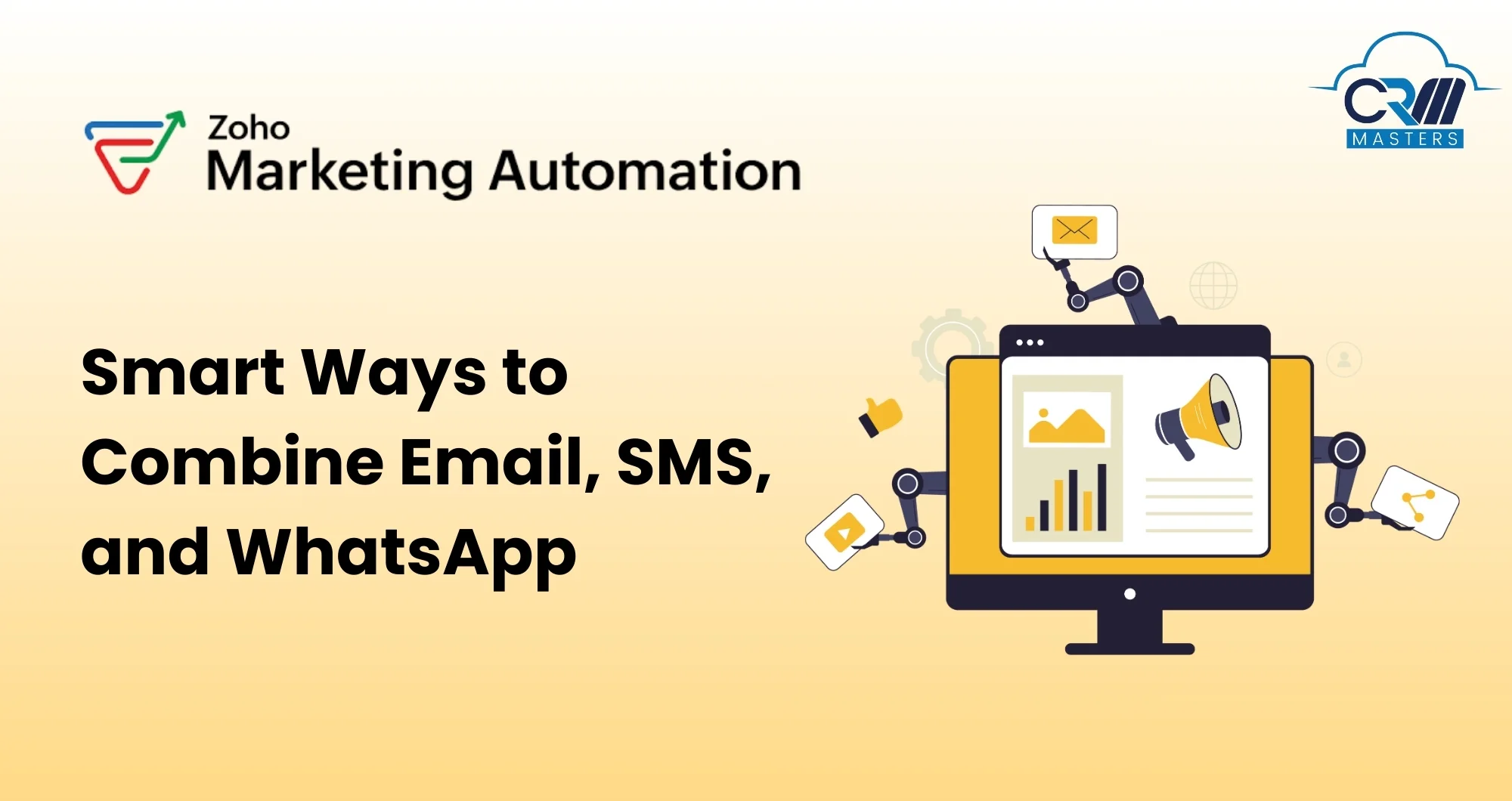
Smart Ways to Combine Email, SMS, and WhatsApp Using Zoho Marketing Automation
Many businesses still rely on a single marketing channel, hoping that one medium will reach every customer. In reality, customers behave very differently today. Some check their email every morning, others respond instantly on WhatsApp, and many still rely on SMS for quick alerts. When brands depend on only one channel, they unintentionally ignore a large part of their audience. This leads to missed opportunities, delayed responses, inconsistent communication, and lower engagement across the buyer journey.
The problem becomes even more visible when teams try to manage all these channels manually. Emails go late, WhatsApp follow-ups never happen, SMS reminders get skipped, and customer journeys lose their rhythm. As the digital world grows crowded, timing and consistency matter more than ever.
This is where Zoho Marketing Automation changes the entire picture. It not only connects Email, SMS, and WhatsApp in one place but also allows you to create a structured flow where each channel supports the other. Instead of treating communication as separate tasks, you can build a smooth, multi-channel journey where messages reach customers exactly where they are most active.
This blog walks you through how these channels work together, why they matter, practical ways to connect them through Zoho Marketing Automation, and how Zoho Implementation Partner helps.
Why Today’s Businesses Need a Multi-Channel Marketing Approach

1. Different Customer Preferences
Some customers respond better to emails, others to WhatsApp messages, and some rely on SMS for urgent notifications. Using multiple channels ensures you reach everyone effectively.
2. Reduced Risk of Ignored Messages
Relying on a single channel increases the chance of messages being missed. Multi-channel communication reinforces key messages across platforms.
3. Balanced Message Delivery
Sending messages across different channels allows businesses to provide detailed information through email, quick clarifications via WhatsApp, and timely alerts through SMS without overwhelming the customer.
4. Wider Audience Reach
Multi-channel strategies help connect with customers at different stages of their journey, from initial awareness to final decision-making.
5. Better Insights and Optimization
Engaging customers across multiple channels gives valuable data about their preferences and behavior, allowing businesses to refine messaging, timing, and approach for better results.
How Zoho Marketing Automation Connects These Channels
The strength of zoho marketing automation lies in the way it brings all three channels into one unified workflow. You do not have to move between platforms, track messages separately, or guess which channel performed better. With Journey Builder, you can design a complete path where emails, WhatsApp messages, and SMS alerts are all part of the same sequence.
For example, a user who signs up on your website can automatically receive a welcome email, followed by a WhatsApp message after they click a link, and finally an SMS reminder if they do not respond within a certain time. All of this runs on its own once you set the rules.
The platform also keeps track of customer actions across every channel. It records who opened an email, who clicked a WhatsApp message, who ignored an SMS, and who interacted with your website. This consolidated view makes decision-making easier, as you can see exactly which channel works best for each customer. Instead of sending random messages, you respond based on real behavior.
Role of Email in a Multi-Channel Strategy
Email carries the weight of detailed communication. It is the channel customers rely on when they want more information, such as product explanations, onboarding content, newsletters, tutorials, or policy updates. In a multi-channel journey, email becomes the space where you build trust and offer clarity. Readers have the time to understand your message, revisit it later, and take thoughtful actions.
When email is connected through Zoho Marketing Automation, you can schedule educational content, trigger messages based on clicks, and send long-form guidance whenever the customer moves closer to making a decision. It becomes the foundation of your communication system, giving customers confidence and knowledge before they move to quicker channels like WhatsApp or SMS.
Role of WhatsApp in a Multi-Channel Strategy
WhatsApp has become the most comfortable and personal communication space for many users. People check it throughout the day, reply faster, and feel more at ease with conversational messages. It is ideal for simple guidance, instant follow-ups, reminders, confirmations, delivery updates, and short educational prompts.
Zoho Marketing Automation makes WhatsApp more structured by assigning it the role of real-time engagement. Instead of sending every message manually, the platform uses WhatsApp for moments that require immediate attention. For instance, after someone opens a pricing email, they may receive a WhatsApp message offering help. The tone remains conversational, and the timing feels natural because it follows the customer’s behavior.
This combination of speed and context makes WhatsApp a powerful part of a multi-channel strategy.
Role of SMS in a Multi-Channel Strategy
SMS remains one of the most reliable channels for urgent or time-sensitive communication. Its open rate is extremely high because people tend to check text messages quickly, even when they ignore other channels. This makes SMS ideal for reminders, OTPs, alerts, short-term offers, and confirmations.
Within Zoho Marketing Automation, SMS supports the moments where timing is critical. If a customer forgets to complete an action, such as booking an appointment or confirming a service, SMS helps you get their attention immediately. It fills the gap between email and WhatsApp, especially when the customer is inactive on both channels. A well-timed SMS can bring customers back into the journey and help maintain a steady flow.
Smart Ways to Combine These Channels Using Zoho Marketing Automation
1. Use Email to Build Awareness
Start with emails to introduce your product, service, or offer. Emails allow you to provide detailed information, links, and visuals that help customers understand your message before moving to faster channels.
2. Follow Up with WhatsApp for Personal Engagement
After sending an email, WhatsApp can be used for quick reminders, conversational follow-ups, or clarifications. This creates a more personal connection and encourages prompt responses.
3. Send SMS for Urgent or Time-Sensitive Alerts
SMS is ideal for deadlines, confirmations, or immediate action items. It ensures your message reaches the customer quickly when timing is critical.
4. Sequence Channels Based on Customer Behavior
Use behavior-based triggers in Zoho Marketing Automation. For example, if a customer opens an email but does not respond, send a WhatsApp nudge, and if there’s still no action, follow up with an SMS reminder.
5. Maintain a Balanced Flow Across Channels
Avoid overwhelming the customer by carefully spacing messages. Each channel should have a defined purpose in the journey, creating a smooth, connected experience rather than repetitive messaging.
Key to Accurate Multi-Channel Messaging
Even with three strong channels, your communication will not work unless it reaches the right audience. Segmentation solves this problem by dividing your contacts based on behavior, interest, location, source, or engagement level. Zoho Marketing Automation allows you to create these segments and send channel-specific messages that match the customer’s mindset.
For example, new leads can receive a detailed introduction through email, while returning customers can get a quick WhatsApp check-in. Highly active users may respond better to SMS reminders. By separating your audience this way, you avoid generic messages and give each customer the experience they expect.
Good segmentation strengthens every part of a multi-channel strategy because it ensures relevance.
How This Approach Enhances Customer Experience

Customers feel more comfortable when communication flows naturally. A well-designed multi-channel journey ensures that customers receive information at the right time, in the right format, and through the channel they prefer. Email gives them clarity, WhatsApp gives them convenience, and SMS gives them urgency. Together, these channels create an experience that feels consistent, thoughtful, and practical.
A business that communicates this way appears organized, responsive, and customer-friendly. Customers feel supported throughout their journey, which increases satisfaction and strengthens trust. This experience becomes the foundation of long-term loyalty.
Conclusion
If you want support in setting up these multi-channel workflows with clarity and precision, CRM Masters, as a Trusted Zoho Partner, can help you implement Zoho Marketing Automation in a way that suits your exact needs. From journey design to integration, our team ensures that your marketing communication becomes organized, efficient, and customer-centric.
FAQs
Q1. Why is multi-channel communication important for modern businesses?
Because customers use different platforms for different purposes. Email, WhatsApp, and SMS together offer better reach and balanced engagement.
Q2. How does Zoho Marketing Automation support WhatsApp integration?
It connects WhatsApp with journeys, allowing automated follow-ups, reminders, and conversational messages at key points in the customer lifecycle.
Q3. Can Zoho Marketing Automation personalize emails?
Yes. You can create dynamic content, trigger emails based on behavior, and send highly personalized sequences.
Q4. How can CRM Masters help with Zoho Marketing Automation?
CRM Masters assists with setup, journey planning, integration, and optimization to help businesses use the platform effectively.