



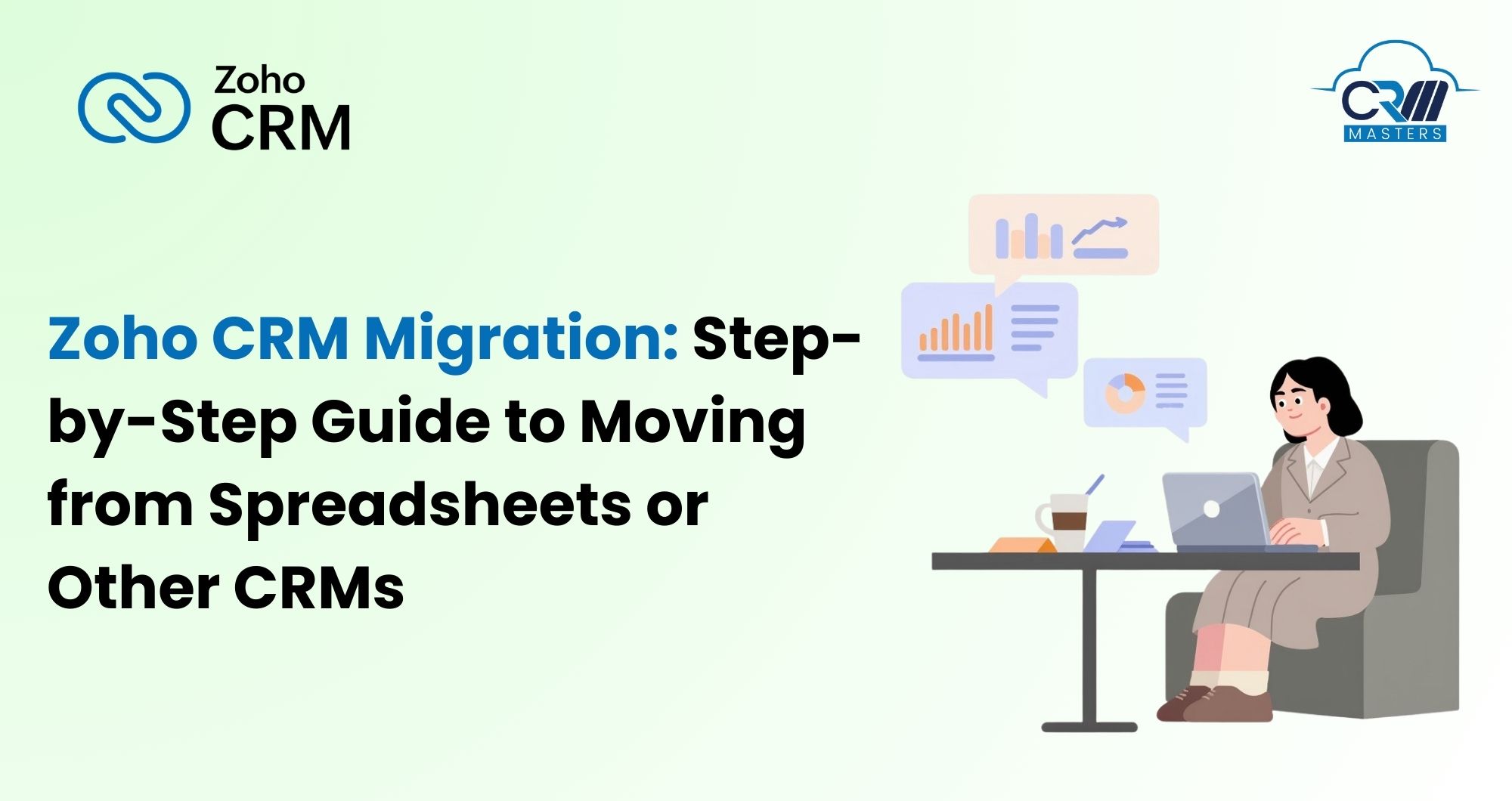
Zoho CRM Migration: Step-by-Step Guide to Moving from Spreadsheets or Other CRMs
As businesses grow, managing customer data across spreadsheets, emails, or disconnected tools quickly becomes inefficient. Sales teams miss follow-ups, reports become unreliable, and leaders lack visibility into pipeline performance.
This is usually the point where companies decide to move to a structured CRM system.
However, simply purchasing a CRM is not enough. The real challenge is safely transferring years of customer data, workflows, and processes without disrupting daily operations.
This is where Zoho CRM migration becomes critical.
A well-planned migration ensures your historical data stays intact, your team adapts quickly, and the new system immediately supports better productivity and reporting.
In this guide, we explain when to migrate, common risks, and a step-by-step Zoho CRM migration process to help businesses move smoothly from spreadsheets or other CRMs into Zoho.
Why Businesses Migrate to Zoho CRM
Many organizations delay CRM migration because they worry about complexity. But staying on outdated systems often costs more in the long run.
Common triggers for migration include:
- Spreadsheets becoming difficult to manage
- Duplicate or inconsistent customer data
- No centralized sales visibility
- Manual follow-ups and reminders
- Limited reporting and forecasting
- Expensive or rigid legacy CRM platforms
Zoho CRM offers flexibility, automation, and scalability at a lower cost compared to many traditional CRMs. This makes it especially attractive for growing businesses across the US and UK markets.
When implemented correctly, Zoho becomes a single source of truth for sales, marketing, and customer operations.
When Should You Consider Zoho CRM Migration?
Migration is usually necessary when:
1. Spreadsheets Are Slowing Teams Down
Multiple Excel sheets, manual updates, and version conflicts lead to errors and lost information.
2. Your Current CRM Feels Too Expensive
Some legacy CRMs charge heavily for users, add-ons, and customization. Zoho often provides similar functionality at a fraction of the cost.
3. Poor User Adoption
If your team avoids the current CRM, the system isn’t helping productivity.
4. Reporting Is Unreliable
Leadership needs real-time dashboards, not manual data compilation.
5. You Need Automation
Modern sales teams rely on workflows, reminders, and automated processes that spreadsheets simply cannot provide.
If these issues sound familiar, moving to Zoho CRM is usually the next logical step.
Common Zoho CRM Migration Challenges
Before discussing the process, it’s important to understand where migrations often fail.
Data Quality Issues
Old systems usually contain duplicates, missing fields, or inconsistent formats.
Broken Relationships
Contacts, deals, and accounts may lose connections during migration if not mapped correctly.
Workflow Mismatch
New CRM structure may not reflect real sales processes.
User Resistance
Teams may hesitate to adopt the new system.
Downtime Risk
Poor planning can interrupt daily operations.
A structured migration approach eliminates most of these risks.
Additional Migration Risks to Consider
Beyond technical challenges, businesses often face operational and strategic risks during Zoho CRM migration.
Loss of historical context
Notes, call logs, attachments, and email conversations may not transfer properly if they are not planned during migration. Losing this context affects customer relationships and future decision-making.
Inconsistent sales processes
If different teams follow different workflows, migrating everything into one structured CRM can expose gaps. Without standardization, the new system may feel confusing rather than helpful.
Underestimating change management
Migration is not only a technical shift but also a behavioral change. Teams need time, training, and support to adapt. Ignoring this can reduce adoption even if the system is well built.
Identifying these risks early allows businesses to prepare mitigation strategies and ensures a smoother transition to Zoho CRM.
Pre-Migration Checklist
Before starting Zoho CRM migration, it’s helpful to complete a readiness checklist. This reduces errors and prevents last-minute surprises.
Businesses should:
- Audit all existing data sources (Excel, CRM, emails, tools)
- Identify which data must be migrated and what can be archived
- Define clear goals for the new CRM
- Standardize naming conventions and formats
- Assign internal owners for migration decisions
- Decide user roles and access levels in advance
- Prepare backup copies of all legacy data
- Communicate timelines to teams
Completing this preparation ensures migration is structured rather than reactive. It also shortens implementation time and improves first-day usability after go-live.
Step-by-Step Zoho CRM Migration Process
Below is a proven process followed by experienced Zoho implementation teams to ensure safe and successful migration.
Step 1: Audit Your Existing Data
Start by understanding what you currently have.
Review:
- Contacts
- Leads
- Accounts
- Deals
- Notes
- Activities
- Custom fields
- Attachments
Identify:
- Duplicate records
- Outdated entries
- Missing values
- Irrelevant fields
Migration is the perfect time to clean your data, not transfer clutter.
Clean data = better reporting + higher adoption.
Step 2: Define Your CRM Structure First
One common mistake is migrating data before designing the new system.
Instead:
Plan:
- Modules
- Fields
- Pipelines
- User roles
- Permissions
- Layouts
This is where many businesses align migration with broader Zoho consulting services to ensure the CRM reflects real workflows rather than copying old inefficiencies.
Do not replicate a broken system inside Zoho.
Improve it.
Step 3: Map Old Data to Zoho CRM
Data mapping ensures every field lands correctly.
For example:
- Old “Customer Name” → Zoho “Account Name”
- Old “Sales Stage” → Zoho “Deal Stage”
- Old “Owner” → Zoho “Record Owner”
Create a mapping sheet before importing anything.
This prevents:
- misplaced data
- reporting errors
- confusion later
Proper mapping is the backbone of successful Zoho CRM migration.
Step 4: Prepare and Clean Data
Before import:
- Remove duplicates
- Standardize formats (phone, email, dates)
- Delete inactive records
- Fix spelling errors
- Validate mandatory fields
Remember:
👉 Garbage in = garbage out
Clean data improves automation, reporting accuracy, and user trust.
Step 5: Configure Zoho CRM
Now configure the system:
- Custom fields
- Modules
- Workflows
- Automation rules
- Validation logic
- Email templates
- Dashboards
If your business uses multiple tools, this stage often includes Zoho integration services to connect accounting, marketing, and support systems.
Migration works best when Zoho becomes your central system, not just another tool.
Step 6: Test Migration with Sample Data
Never migrate everything at once.
Instead:
- Import small sample data
- Validate records
- Check relationships
- Test reports
- Run workflows
Let real users test:
- lead conversion
- deal progression
- dashboards
Testing catches issues early when fixes are easy.
Step 7: Full Data Migration
Once testing is successful:
- Backup old data
- Freeze updates temporarily
- Import complete dataset
- Validate totals
- Spot-check records
Always keep backups for safety.
Step 8: Train Users and Go Live
Technology alone does not guarantee success. Even the best CRM setup fails if users do not adopt it consistently.
Training should be practical and role-based rather than generic. Sales reps, managers, and administrators use the CRM differently, so each group should receive focused training on their daily tasks.
Effective onboarding typically includes:
- live walkthrough sessions
- recorded tutorials
- process documentation
- sandbox testing environments
- real examples from actual deals
It’s also helpful to identify “CRM champions” within each team who can support others during the transition.
When users clearly understand how Zoho CRM saves time — such as automated reminders, faster reporting, and centralized data — adoption increases naturally.
A smooth go-live focuses on people first, not just technology.
Step 9: Post-Migration Optimization
Migration is not the finish line.
After 30–60 days:
- review workflows
- clean unused fields
- adjust reports
- gather feedback
- improve automation
This ensures Zoho CRM continues supporting growth.
Migrating from Different Systems
From Spreadsheets
- easiest technically
- biggest improvement in productivity
- requires heavy cleanup
From Other CRMs
- requires careful mapping
- more complex relationships
- higher risk without planning
Many businesses work with a Zoho implementation partner during complex migrations to avoid downtime or data loss.
Example Use Case
A mid-sized distribution company was managing 15,000+ contacts across Excel and Gmail.
Issues:
- duplicate entries
- missed follow-ups
- no sales visibility
After structured Zoho CRM migration:
- centralized all data
- automated lead assignments
- integrated accounting
- created real-time dashboards
Within three months:
- reporting time reduced by 40%
- follow-up consistency improved
- adoption increased across teams
This highlights how migration is not just a technical task — it directly impacts business performance.
Key Benefits of Zoho CRM Migration
When migration is executed correctly, businesses typically experience measurable improvements across operations.
Common benefits include:
- centralized and reliable customer data
- reduced manual work through automation
- faster reporting and forecasting
- improved collaboration across teams
- higher user adoption
- better visibility for leadership
These outcomes directly impact revenue growth and operational efficiency, making Zoho CRM migration a strategic investment rather than just a system change.
Best Practices for Successful Zoho CRM Migration
- Plan structure before import
- Clean data thoroughly
- Migrate in phases
- Test everything
- Train users properly
- Avoid over-customization initially
- Document changes
- Review after go-live
Following these practices keeps migration smooth and sustainable.
Should You Handle Migration Internally or With Experts?
Small datasets may be handled internally.
But for:
- large databases
- multiple teams
- integrations
- custom workflows
Expert guidance reduces risks and speeds up delivery.
Experienced consultants can review your migration plan, structure the CRM correctly, and prevent costly rework later.
Final Thoughts
Zoho CRM migration is more than transferring data. It is an opportunity to redesign how your business manages customers, sales, and reporting.
When done correctly, migration leads to:
- better visibility
- faster sales cycles
- improved adoption
- scalable systems
- long-term efficiency
A structured approach ensures your move to Zoho is smooth, safe, and future-ready.
FAQs
Q1. How long does Zoho CRM migration take?
Simple spreadsheet migrations may take a few days. Complex multi-system migrations can take several weeks depending on data size and customization.
Q2. Can I migrate data from another CRM to Zoho?
Yes. Zoho supports imports from most major CRMs through CSV exports or APIs.
Q3. Will I lose historical data during migration?
Not if the process is planned correctly with backups and testing.
Q4. Is Zoho CRM migration risky?
Risks mainly come from poor planning or incorrect mapping. Structured migration minimizes these issues.
Q5. Should small businesses migrate to Zoho CRM?
Yes. Even small teams benefit from centralized data, automation, and reporting compared to spreadsheets.